
Our facility
We started in January 2011. Situated in the northern region of The Netherlands, our facility is seamlessly connected to the reliable Dutch gas transmission network, strategically located at the TTF-market. Our gas storage operates within six salt caverns, each positioned at a depth ranging from 1,000 to 1,500 meters. The unique technical layout includes two tubes per cavern, resulting in an exceptionally high injection and withdrawal capacity. Injection is accomplished through electric compressors, while withdrawal utilizes specialized equipment for heating, pressure reduction and gas drying.
We take pride in providing round-the-clock injection and withdrawal services throughout the year, ensuring constant availability for our customers. Moreover, our facility is characterized by its outstanding reliability, requiring only two short periods of annual maintenance per year.
Main properties
Number of caverns: 6
Working gas volume: approx.: 3,600,000 MWh
Total injection capacity approx.: 13,000 MWh/h
Total withdrawal capacity approx.: 18,000 MWh/h
Certified ISO 50001 Energy Management Certificate
In 2016, EnergyStock was the first energy company in the Netherlands to receive the ISO 50001 certificate. ISO certificates are issued to companies that can demonstrate that they continuously assess and improve their processes and products or services. There are many certificates, for example one about quality (9001) or the environment. ISO 50001 is about energy management.
We want to use energy as economically as possible. We can measure this per installation component. Based on the (change in the) results, we can quickly see whether there is an increase in energy consumption because a component is not properly adjusted or is showing wear, for example. We can then take measures. We also use it as input for maintenance and replacement projects. Whether we choose a particular solution then partly depends on the energy consumption of that solution.
We are regularly assessed to maintain the ISO 50001 certificate. The inspection recently took place again and led to a positive outcome, which means that we are still using energy economically and that the certificate remains valid.
All parts of the facility explained
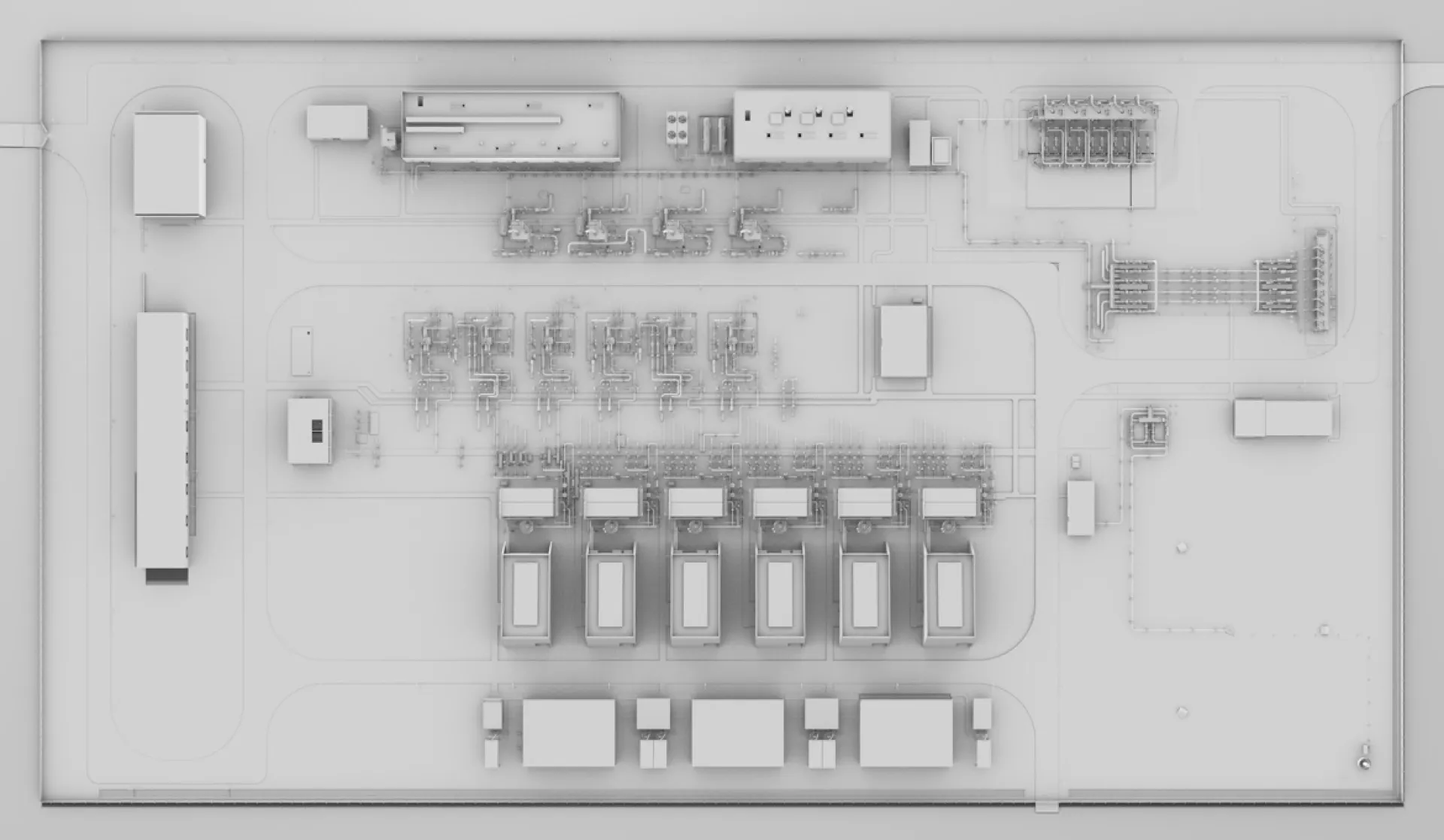
This interactive infographic explains the function of all parts of the installation. Click on a part of the image for a detailed description.
-
Control room
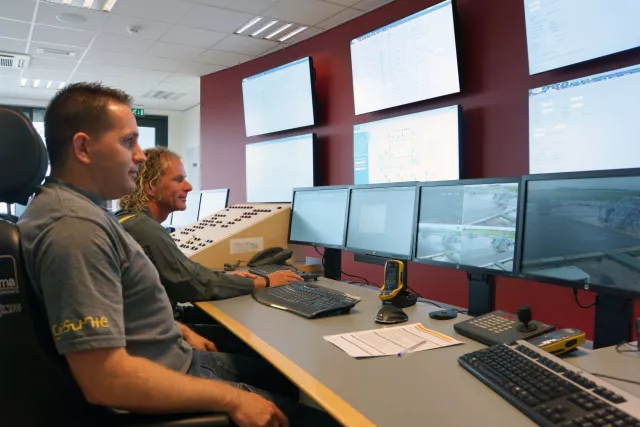
The facility has a control room where the processes can be monitored and controlled. In general, this only happens during maintenance. Normally, the facility is controlled from the Gasunie Central Command Post. There, the facility and caverns can be monitored and controlled in real time. Otherwise, the facility can be operated completely unmanned.
The customers of EnergyStock determine what is injected or withdrawn. Their requests ultimately result in gas either being injected or withdrawn from the facility. -
Metering
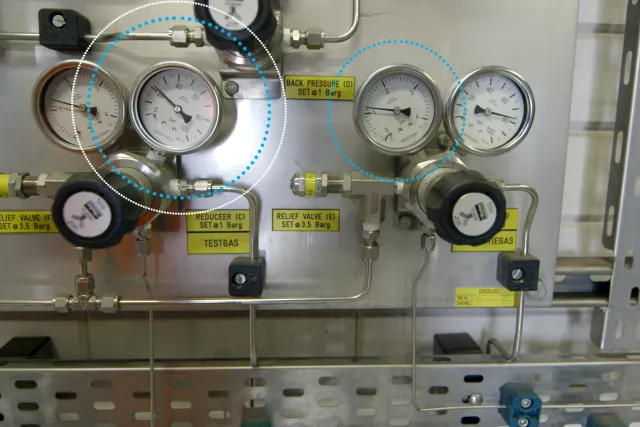
The gas flow and quality is measured during injection and withdrawal. This enables us to know exactly how much gas goes into the caverns and how much gas is delivered to the gas transport network. The flow of gas is measured using ultrasonic flow metres. The quality of the gas is analysed using a gas chromatograph. These very accurate measurements show us exactly how much energy is in the cavern and what should be invoiced to the customers.
-
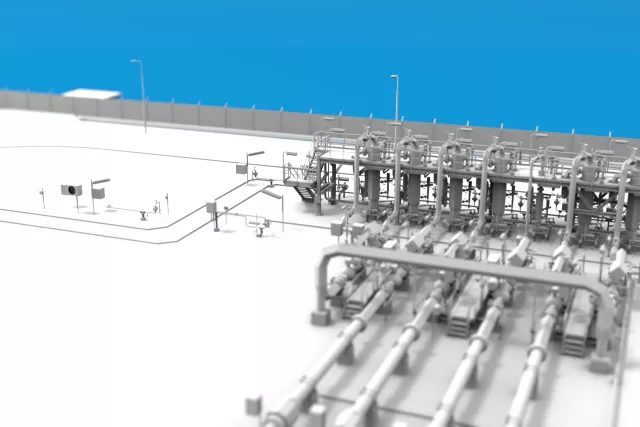
Cyclone filters
Before the gas can be measured, it will be cleaned using cyclone filters. This is done to prevent any of the particles in the gas from polluting the facility and measuring equipment.
-
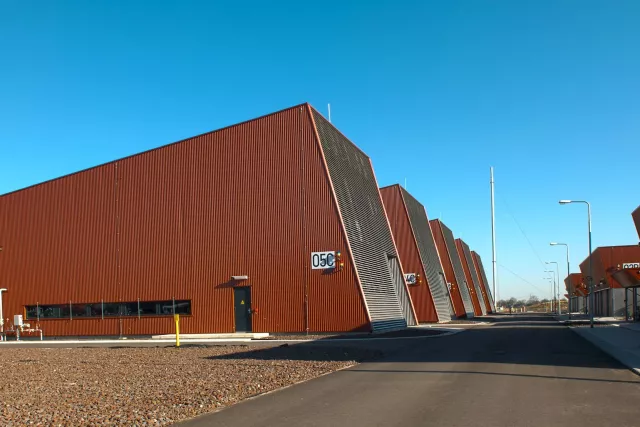
Compressors
Gas compressors ensure that the gas pressure is high enough for injection. The incoming gas has a pressure of approximately sixty bar. The pressure in the caverns is between eighty and one hundred and eighty bar. Electrical compressors compress the gas.
-
Gas coolers
The increase in pressure causes the gas to heat up to around one hundred degrees Celsius. For that reason, the gas is cooled before it is injected into the caverns. This is done by cooling the gas with large heat exchangers.
-
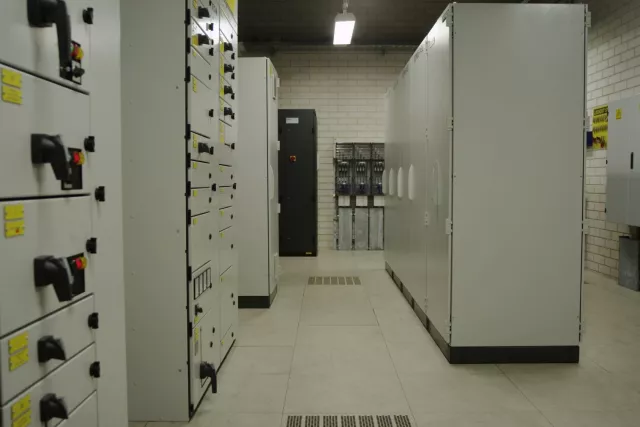
Control buildings
The compressors are monitored and controlled from the control buildings. They work as a kind of volume control on a radio, allowing the compressor to run faster or slower.
-
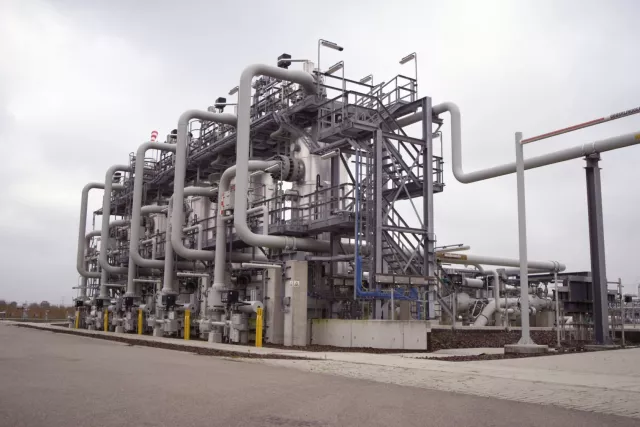
Inlet seperators
When the gas is returned to the Dutch gas transport network, it is treated at the facility.
The gas coming from a cavern can contain solid and liquid particles. The particles are removed by the inlet separators through a simple and error-free process. The gas flows into these vessels under high pressure. The solid and liquid particles will settle at the bottom and the gas exits the separator through the top. -
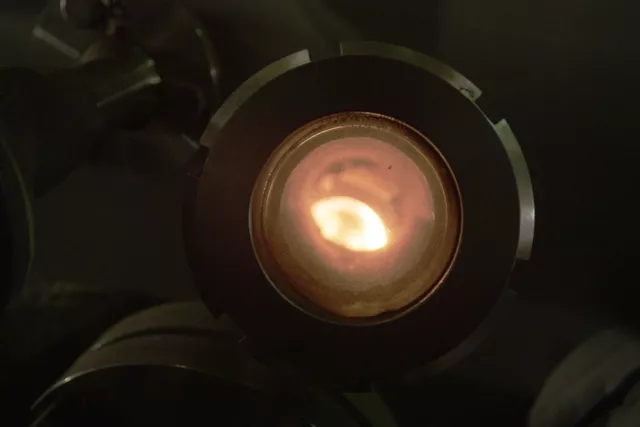
Boilers
The pressure in the caverns is between eighty and one hundred and eighty bar. The pressure in the Dutch gas transport network is approximately sixty bar. Therefore the pressure is being reduced. The gas is then warmed up using hot water, which is heated by boilers. This is done because the pressure reduction causes the gas to cool down. After pressure reduction, the temperature should be fifteen degrees Celcius.
-
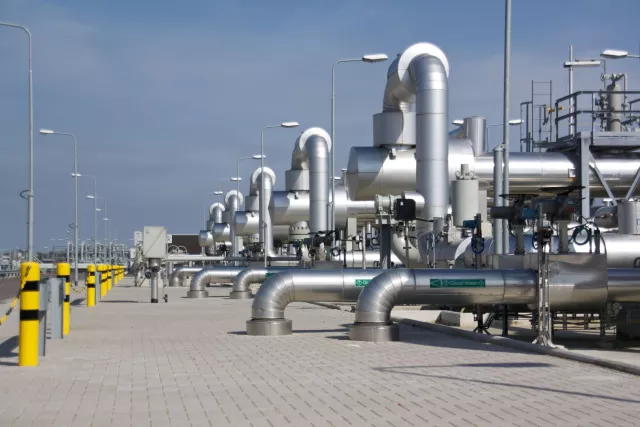
Heater/Choke trains
In the heater/choke trains, the gas is first heated up using hot water from the boilers. The pressure is then reduced to 60 bar using chokes, making the gas suitable for the Dutch gas transport network.
-
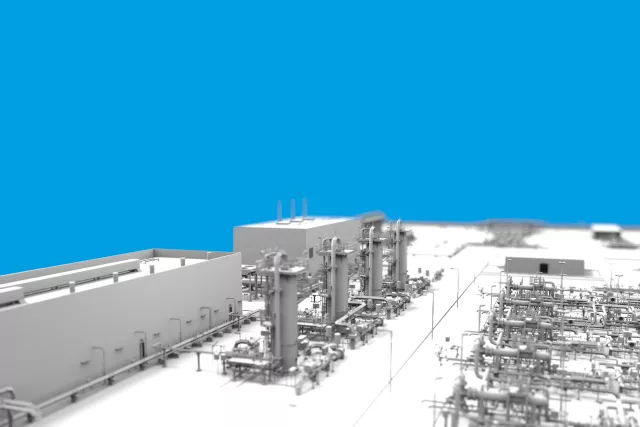
Glycol contactors
The last step in the process is the removal of moisture from the gas. The gas coming from the caverns is damp because the walls and the bottom of the caverns are wet due to the leaching process. In the glycol contactor, which is a high upright vessel, the gas comes in intensive contact with glycol, resulting in the gas being dried. The dry gas then flows on and the moisture-saturated glycol is collected. The glycol is then separated from the moisture so that it can be reused. This is done in a glycol regeneration unit.